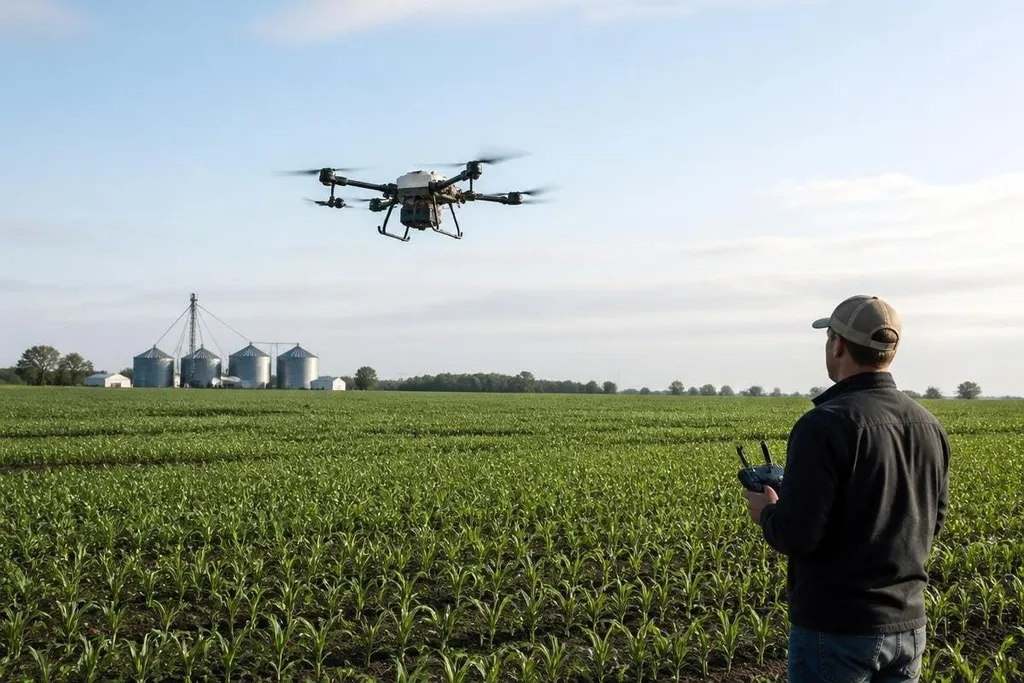
A farming drone can scan a field, carry a camera, or apply a small load of treatment without sending a tractor between crop rows. That can help when soil is wet, crops are tall, or a grower needs a quick view of a problem. It also adds costs, flight limits, data questions, and safety work.
- Aerial images can show uneven crop growth before the issue is easy to see from the ground.
- Small aircraft can reach wet or steep areas without compacting more soil.
- Batteries, weather, rules, and data handling can limit the value of a drone.
Where farming drones help
A camera drone gives a grower a view from above. That view can reveal gaps in planting, standing water, storm damage, or patches that need a closer check. The drone does not fix those problems, but it can help a worker decide where to walk or where to send another machine.
That change matters most on large or hard-to-reach fields. A person can inspect a marked area instead of crossing every row, while a tractor can stay on firmer ground. The useful result is better task planning, not an automatic answer about crop health.
Some drones carry spray equipment. They may apply treatment to a limited area or reach ground that is hard for a larger vehicle. The operator still has to choose the product, set the dose, check wind, and follow the label. A flight plan cannot correct a poor treatment decision.
The limits of aerial data
A drone image can show that one part of a field looks different. It may not show why. Poor drainage, pests, disease, soil change, and lighting can create similar patterns, so a worker still needs a ground check before acting.
Image quality also depends on the camera, flight height, weather, and timing. A cloudy flight may produce a different result from a bright one. If each flight uses a different setup, comparisons become harder and a grower may chase changes that came from the image rather than the crop.
Data storage adds another question. Images can show field boundaries, crop conditions, and work patterns. A farm should know where those files go, who can view them, how long they stay there, and whether another company can use them for a separate purpose.
Those files matter when a drone flies near public roads or workers. Farming drone reports from Robot24.com can show the flight area and weather limits, then record what the operator did when conditions changed. That leads into the daily work of keeping people and aircraft apart.
Safety, weather, and daily work
A drone needs a clear operating area, a trained operator, and a plan for lost signals or low battery. People, animals, buildings, power lines, and other aircraft can all change the risk during a flight. Spraying brings extra concerns because drift can affect nearby crops, workers, waterways, or homes.
Weather can stop a plan before the drone leaves the ground. Wind affects flight control and spray movement. Rain can damage equipment or reduce image quality. Heat can change battery performance. A farm that depends on one drone for a time-sensitive task needs a backup plan when conditions close the flight window.
The work also continues after landing. Batteries need charging and storage. Cameras need cleaning. Flight records need checking. A damaged propeller or blocked spray nozzle can turn a short job into a repair visit.
Costs and the work they replace
The purchase price is only one part of the decision. A farm may also need spare batteries, charging equipment, software, repairs, training, insurance, and time for planning. A lower-cost drone can become expensive if its images need manual sorting or if replacement parts are hard to get.
The right comparison is the full task. Count the hours needed to inspect the field on foot, the fuel and soil wear from a tractor, and the cost of hiring an outside operator. Then compare those figures with the drone's setup and support needs.
I'd treat a farming drone as a field inspection tool first, then add spraying only after the farm has a safe process and a clear way to check results.
A practical buying checklist
Before buying, check these points:
- Define the job: inspection, mapping, spot spraying, or another task.
- Check the field: note trees, wires, slopes, buildings, and nearby people.
- Test the data: confirm that images are clear enough for a real farm decision.
- Price the support: include batteries, repairs, software, training, and storage.
- Plan for failure: decide what happens when wind, rain, signal loss, or a flat battery stops the flight.
Start with one repeatable task and record what the drone changes: inspection time, tractor trips, missed areas, or treatment checks. If the result cannot be measured, the farm is buying another screen rather than a useful work tool.